Showing posts with label digital tape recorder with usb. Show all posts

Thursday, October 30, 2014

Zmodo DVR-DK1690-1TB 16-Channel annel H.264 Surveillance CCTV Security DVR Camera System

Zmodo DVR-DK1690-1TB 16-Channel annel H.264 Surveillance CCTV Security DVR Camera SystemI have to say that I am very pleased with this system. I bought it to protect my small business and it does just that! I would honestly say that the quality of these cameras is comparable (if not better) to the $1000+ system I purchased from an installer prior to this one. The night vision works great and the weatherproof cameras just feel like they are built to last. Its a good investment and I LOVE that I can use the remote viewing feature from my iPhone as this allows me to keep tabs on my building regardless of where I am at. The setup of this system is very simple (I did it by myself and am not a professional). Only thing I couldn't do myself is set up the remote viewing. I had to call tech support to have them help me out but they had this up and running within 20 minutes or so. They were very nice and very knowledgeable. They even gave me tips on how to use the pan/tilt/zoom functions of the cameras after describing to them my building and what areas I was trying to get a good view on. Thanks Zmodo for offering a quality product at a good price while still treating your customers with dignity and respect. I will most definitely keep you in mind for future security purchases!!!

Save 7% Off

Thursday, October 23, 2014

Creative MuVo TX FM 256 MB MP3 Player

Creative MuVo TX FM 256 MB MP3 Player
  • 256 MB holds up to 8 hours WMA or 4 hours MP3 music--weighs just 1.1 ounces
  • Built-in FM and FM recorder with 32 presets
  • Built-in microphone for easy voice recording
  • Transfers music via USB 2.0;compatible with Windows 98SE, 2000, Me, XP
  • Powered by 1 AAA battery; provides up to 15 hours of continuous play

This MP3 player is excellent. I like that there is not need for additional cables when connecting to a PC. It also has great sound and microphone quality.

Thursday, October 16, 2014

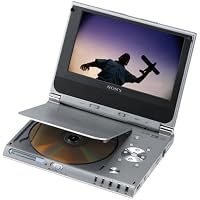
Sony DVP-FX700 7-Inch Portable DVD Player

Sony DVP-FX700 7-Inch Portable DVD Player
  • 7-inch TFT LCD screen with 16:9 aspect ratio to match the dimensions of your favorite movies
  • Includes built-in stereo speakers with simulated surround sound
  • Dolby Digital and DTS passthrough with optical digital-audio output
  • Rechargeable battery with 3-hour playback ensures uninterrupted viewings of 1 to 2 movies
  • Includes remote control, AC power adapter

I bought this unit 3 weeks ago from Best Buy. I had previously purchased a Mintek 1710 (7 inch screen) from Best Buy in August 2002. The Mintek had a sharp picture but its build quality and its battery were exceedingly poor. I had two Mintek's go bad on me until Best Buy simply asked me to apply my initial investment towards any new DVD player.

Next, I acquired a Toshiba SD-P2500 with an 8.9 inch sceen. This unit has fine build quality and the sound is superb. However, after 2 days of fiddling with its controls, I could never get a good picture in lowlight scenes. The blacks were too milky. I watched the DVD of TWISTER and was really disappointed with the experience. Finally, I took it back to Best Buy and got the Sony.

The Sony is a beautiful unit with a 7 inch screen. It lacks the progressive scan feature (no use on the built-in screen) of the Toshiba and the component video outputs it does have an S video out. The sound from the tiny speakers is nearly as good as the Toshiba. However, this unit has the finest build quality (quite unlike the Mintek which would get dented with the slightest bump) of all the portable DVD players that I have seen. It is made in Korea and not China (not sure if that has anything to do with it).

The picture quality is simply superb with deep blacks. It has two buttons right on the LCD that allow you to adjust the brightness and contrast very convenient. I also love the tiny blue LCD display that gives you information on the track number etc. So far the battery appears to perform well. It has only one headphone out unlike the Toshiba (which had two) but this can be rectified with a $5 split cord from Radio Shack if you need it. I have had no problems with DVD's slipping in my car over road bumps. The manual is well written as you might expect from Sony.

I must confess that I miss the 8.9 inch screen of the Toshiba and also the ability of the Mintek to play PAL DVD's. (Neither the Toshiba or the Sony will play PAL DVD's).

Finally, I would highly recommend that one get a product replacement plan with these players. Although, I am so far very happy with the Sony, I just have a feeling that portable DVD players are still not quite robust enough for the use that our children subject them to in the course of travel.

Buy Sony DVP-FX700 7-Inch Portable DVD Player Now

I compared the Sony with other available units costing half as much or less and bought the Sony based on picture quality alone. I figured the Sony would be worth the additional cash. Well, I was wrong. The price has been steadily dropping since I bought it so if you really want it, I suggest waiting.

Picture quality is good, but the resolution isn't anything spectacular. I'd never seen the specs listed anywhere but the owner's manual says it's 234x480. If you try to view JPEGs from a CD, it becomes painfully obvious the resolution isn't up to the task. DVD's look pretty good though and ultimately that's what this thing is for.

I'm content with the picture quality for DVDs but I am disappointed with this player's feature set. First, you absolutely can NOT fast forward without the remote control. I'd read that on someone else's review and couldn't believe it...well BELIEVE it. It's absurd that Sony left that feature off the console. You can fast forward with the remote but the console only allows you to skip chapters. This becomes incredibly annoying when watching a DVD like Sex and the City where chapters are entire episodes. Want to skip the opening credits of each episode? too bad, unless you have the remote. The remote control is nice, but why should I have to lug that around to accomplish a basic feature?

Second, most home DVD players today will remember where you left off on a certain number of DVDs so you can resume later without having to skip forward to where you were. Unfortunately, this DVD player doesn't have that feature as it remembers nothing once the DVD is removed or the unit is powered down.

Also, the headphone volume is weak and further weakened by a headphone splitter which is necessary for two headphones because Sony only provides one headphone jack. On a recent flight, I had to unplug the headphones and listen with the speakers because the max volume was too low for two sets of headphones. I'll concede however that a good pair of noise canceling headphones would solve this problem.

One other thing, not only does this unit not come with a car adapter, Sony does NOT make one for it! The $10-20 adapters at Circuit City/Radio Shack do NOT work. Come on Sony, what a joke!

Battery life is on par with compeition (2.5-3hrs). Recharge time is a respectable 2.5 hours, but you can NOT use the player while recharging.

Overall, picture quality and construction are better than the competition, but this is far from the perfect player. My recommendation would be to wait for the price to continue dropping or better yet, wait for the next generation of portable DVD players. They are bound to get cheaper/better than this.

Read Best Reviews of Sony DVP-FX700 7-Inch Portable DVD Player Here

This is one sleek sexy little gadget with a tremendously beautiful screen. With excellent sound, its a perfect tool for those long car/plane trips so you can watch those big screen blockbusters anytime,anyplace without losing anything. Its also perfect for use as your home DVD player as it hooks up easy to your home TV. It has a good battery life so you could watch almost any movie and then watch the extras on just one charge (which is about 3 hours so it would be hard to watch the Lord of the Rings extended versions and the extras too lol). But as i watch Spider-Man on it right now it is just an amazing little thing.

Want Sony DVP-FX700 7-Inch Portable DVD Player Discount?

as noted in other reviews, maximum volume is not loud enough when using this player on an airplane with inexpensive noise-cancelling headphones. Based on a prior review and recommendation, I bought the Boostaroo amplifier from cyberguys.com for about $30 including shipping. While I haven't used the amplifier in the air yet, it clearly does amplify volume with no discernable loss of sound quality. This product makes a major disappointment in the sony dvd player disappear.

Thank you "electronics fan" for the tip.

I purchased a Sony portable DVD player this time last year. Big mistake. It stopped working shortly after the 90 day warranty and Sony would do nothing but let me pay them for a repair/exchange. So I paid for an exchange + Shipping. Then the replacement they sent (same model) would not even turn on. Then they offer to let me pay to send that one back too (months have transpired because they do not send a replacement until they have logged in and assessed the one you send back). Meanwhile, I still have nothing. Sony charge me $500 for a lemon product and will not stand behind it. I will never purchase a Sony product again.

Monday, October 13, 2014

Canon VIXIA HV40 High Definition Camcorder

Canon VIXIA HV40 High Definition CamcorderOver ten years ago I bought Sony's legendary TRV-900. It was a consumer camera so good and so ahead of its time that it remained on the market for four years an eternity in the consumer electronics industry.

Canon has a similar product in their HV series HDV camcorders. They released such an outstanding camera two years ago with the HV20 that the two new models since (the HV30 and now the HV40) are really just small refinements of a mature and well designed product.

**NEW FEATURES**

So let's get one thing out of the way up front: There really isn't much of a difference between this camera and last year's HV30 (which was a small upgrade on the superb HV20). As an HV20 owner, I felt right at home when this arrived and I powered it up. Video quality is about the same, they look pretty much the same, and overall performance is the same too.

What is different is the addition of true 24P recording which offers a more film-like frame rate over the standard 30 frames per second. It should be noted that prior versions of this camera (as well as Canon's AVCHD models) also shoot 24P but that mode requires additional software to get to "true" 24P video when editing. You'll want to check to ensure that your editing software supports true 24P footage as it's not a configuration that is on many consumer cameras.

**AVCHD OR HDV?***

If you're reading this it's likely that you're in the market for a new camcorder. It's also likely that you're confused over the multitude of different formats currently available: hard disk, flash memory, tape, etc. etc.

Despite the many recording mediums, the current crop of consumer cameras can be delineated into two camps: AVCHD (the hard disk and flash based cameras) and HDV (tape based).

HDV cameras have two advantages over their AVCHD counterparts. The first, while not as compelling a reason as a year ago, is compatibility. HDV was the first consumer HD format and is almost universally supported by just about every video editing software package released over the last three to four years. In addition the HV40 can also shoot in the older standard definition DV format, a format so old that even software and hardware from ten years ago can work with the footage.

Another factor to consider is the firewire port. Want to record directly to your PC or Mac? Or perhaps do a live broadcast to UStream or Stickam? HDV cameras like the HV40 stream compressed video in realtime over Firewire, something the AVCHD cameras don't do.

Still, Canon's AVCHD cameras are now recording at a higher bitrate and with a more advanced video compression algorithm that makes for better image quality. Canon's flash based cameras, like the outstanding VIXIA HFS100, are mostly solid state and lack the complex (and delicate) machinery of a tape-based camcorder like the HV40.

**CONCLUSION**

Canon's HV20 was a very mature product right at launch and that maturity continues in this iteration. Still, there's nothing so compelling in the HV40 that makes it a necessary upgrade for HV30 or HV20 owners. For first time buyers, if you're able to pick up an older model at a lower price you won't be making much of a sacrifice in terms of features. It's a great camera, just not any greater than the prior versions!

For most consumers HDV cameras are old technology. In fact I wouldn't be surprised if the HV40 is the last tape-based camcorder Canon releases to market. AVCHD has matured to the point that I am now recommending that to friends over HDV based cameras. AVCHD's lack of moving parts combined with the very low cost of flash memory makes it tough to recommend the bulkier mechanical alternatives like the HV40.

If, however, you're using an older computer or need to stream video live the HV40 is one of the best (if not the best) HDV consumer cameras on the market.

At the time of this writing, , one of the most trusted technology review sites on the web, list's the HV40's immediate predecessor, the HV30, on three its five Top Camcorders lists: Best Camcorders (Overall), Best Home Movie Camcorders and Best HD Camcorders . The only two categories in which they don't list the HV30 as one of their best models are the "Best Pro Camcorders" list (all of which are significantly more expensive than the HV30) and the "Best Budget Camcorders" list (all of which are significantly cheaper).

That's a tremendous show of support for the HV30. As I write this, CNET hasn't yet published their full review of the HV40, but as it incrementally improves on some of the HV30's features, I have no reason to think CNET will think any less of the HV40's performance.

As an amateur videographer, without CNET's ability to shoot with as many other models as they enjoy, I trust and value their judgement. How does the HV40 stack up against the competition? I couldn't say.

As an enthusiast, however, I can share my experience and tell you that have LOVED and been amazed by the video I've gotten from this little beauty. But while the results have far surpassed my expectations, there are some limitations with the unit that made the process of shooting and transferring the footage less satisfying than the final product. Following are the pros and cons as I've seen them.

Pros:

Video Quality: This is far and away where the HV40 shines. I've used other consumer camcorders, and the HV40's outshines them all. Even in low light, the videos are beautiful. Colors are rich, movement is smooth and the level of detail is almost frightening. On my 24" computer screen and 52" plasma television, the images are knock-your-socks-off gorgeous. I can't imagine consumer-level video getting much better. On a few shots the camera struggled with focus, but that was rare and I can't believe any camera gets it right 100% of the time. Even on those occasions, within a few seconds the focus locked on accurately.

Design: The HV40 looks and feels great in your hand. I love the piano black finish. Very classy. The camera isn't too heavy to carry around for a day, nor is it so light that it feels cheap or flimsy. I'd say Canon got this just right.

Ergonomics: I found it pretty intuitive to use the HV40's controls right off the bat: The shooting and zoom controls are where I'd expect them to be. Likewise, the On-Off-Play switch and other controls were easy to find and use.

Ease of Use: There's a lot to explore on this camera: Numerous shooting options, frame rates and scene modes. Some of it looks very cool and interesting, but my embarrassing confession is that I haven't used a one. I put the camera on Auto and leave it there. I just haven't had the time yet to play. Happily, even on Auto, the result are always close to perfect. I'd like someday to learn the advanced options and get more artistic with my videography; I'm just not there yet. But it's nice having a camcorder I can grow into.

Built-In Video Light: I've never had one of these on a camcorder before, and I'm loving it. Comes in handy not just indoors, but for filling in harsh shadows outdoors. Sweet.

Cons:

Optical Stabilization: I hate criticizing Canon's Image Stabilization because I can't say if other camcorders do it better. I've had a lot of experience with Canon's still cameras and they're known for excellent stabilization. Which is why I've been so surprised how ineffective the IS is on the HV40. A lot of my video especially from mid-zoom and higher is too shaky to use. Of course, part of the problem is user error like others, I often shoot using the wide-screen LCD, which is the worst way to steady your camera. Much better is to look through the eyepiece, which forces your to brace the camera against your face, rather than shakily holding it at chest level. Speaking of which...

LCD and Viewfinder: I'm surprised how unimpressive the HV40's LCD and viewfinder are. I have the Canon HV20, which is two-generation old technology, and I don't think they've upgraded either of these important components since then. At 2.7 inches, the wide screen LCD feels cramped. For comparison, an iPod Touch or iPhone's screen is a roomy 3.5 inches. Moreover, the resolution on the HV40's LCD is a trifling 211,000-pixels; again, not upgraded from a model over two years old. That means your LCD doesn't show a lot of the detail you're capturing with the camera. Even worse is the eye-level viewfinder, which is so coarse and grainy as to be barely acceptable. Since that's the viewfinder you should be using when you shoot, it really needs to be improved. The only good news is that after viewing your video through the eyepiece or using the LCD, you'll be astounded at how much better it appears when you eventually display it on a computer or TV.

Tape-Based Technology: There have been many debates on hard-drive vs. taped-based camcorders. To my understanding, tape-based video continues to hold an edge when it comes to quality and compatibility with computer-editing programs. I don't care: I'm ready to leave videotapes behind. Using the miniDV tapes feels very 1980's to me. They're slow to rewind and fast forward, you can't jump to a specific scene and when transferring them to a computer, it happens in real time i.e., 30 minutes of shooting takes 30 minutes to download to your PC. I prefer MP3 players to cassette tapes, my DVR to a VCR, and DVDs to videotapes. This miniDV shooter is the last thing I have to use tapes with, and I'm ready for what's next.

Conclusions: The Canon's HV40's pros are far more important than its cons, with the first one, video quality, really being the primary concern. With the HV40's outstanding output, its impossible not to love what comes out of this camera. The camera also feels great and is easy to use. Still, I'm deducting a star for the cons, which, while not of primary importance, remain disappointments. Most notably, its past time to upgrade the LCD and viewfinder and to make the switch to hard drive based storage (not everyone agrees on that last point, though; miniDV does have its adherents).

As a point of interest to Mac users I transferred and edited the video from the HV40 to my two-year-old iMac with no problems. I've upgraded to the iLife 09 package, and iMovie 09 had no problems importing or displaying the video. Although iMovie recommends you import your video at a reduced size (which saves hard disc space and is less processor intensive to work with) I imported everything at full resolution and had no problems, crashes or slowdowns while working with it. Not only that, but, (without going off on too much of a tangent) it was a great pleasure using iMovie 09 with the HV40's video moving footage around and making edits was painless and, using one of Apple's template, my movies look like professionally edited mini-masterpieces, which is less a tribute to my limited-skills as it is testimony of their slickness and usability of that program. Bottom line: If you're on a modern Mac, the HV40 works with it flawlessly.

Scott Sherman, author, Lambda Literary Award Winning Best Men's Mystery, 2009, First You Fall: A Kevin Connor Mystery

Buy Canon VIXIA HV40 High Definition Camcorder Now

The Canon HV40 is basically a slightly improved Canon HV30 (which itself was a slightly improved HV20), with a few extra features. The HV line has been very popular the past few years and has a devoted following of fans and enthusiasts. There are even web sites devoted to the HV line. So if you wish to research the HV line in-depth, the resources are definitely there. Moving on to the HV40 in specific, the biggest new feature is 24P recording which offers footage more comparable to real film. To be honest, I doubt this feature will matter or make a difference to the average consumer, but for film students, enthusiasts, and professional videographers, it offers more creative control and that true "cinema" effect. There are plenty of sample videos posted on the web demonstrating the effect of 24P (and the HV40 itself). The HV40 maintains the Canon HV line reputation of being the cream of the crop among consumer HDV cameras. However, with AVCHD significantly closing the gap, both in image quality and compatibility, with HDV this past year, the HDV format is disappearing rapidly from the consumer market. The excellent image quality of the latest ACVHD cameras now surpasses HDV. Coupled with the speed and convenience of tape less recording, this makes AVCHD an almost irresistible choice if you are currently shopping for a video camera. Although I agree AVCHD is the more future-proof choice, there are several compelling arguments to consider the HV40. First, and most importantly, is its backward compatibility with HDV or SD mini-DV. If you have a library of mini-DV tapes, you can play them and capture to PC with this camera. Your existing video editing software (if any) is also more likely to be compatible with the HDV format, even if it's a few years old. Also, as I mentioned earlier, although ACVHD has made great progress, it's still not the most system friendly format. This can be a major hurdle if you have an underpowered or older PC. On a single core or budget CPU system, AVCHD may likely give you significant headaches. In fact, if your system is really old or underpowered enough, you may have to add a system or video card upgrade into the budget if you wish to use AVCHD files beyond basic capture. If you're simply looking for a high-definition video camera that you can use with your existing software and system, yet still capture amazing footage, the HV40 is a good choice, especially if you already use mini-DV. Another consideration is storage. HDV is self-contained. You can capture, edit, burn a DVD, and delete the footage from your system to preserve disk space, yet still have a backup of your footage on a cassette. With AVCHD, you have to allocate permanent storage space on a hard drive or burn your captured files to optical disk as backup, the latter being very inefficient with current 4.7GB DVD's. Of course, the downside with HDV is that you have to purchase tapes, but they are pretty cheap these days, especially for multi-packs. You can use regular mini-DV tapes. There is no requirement or need to purchase more expensive HDV specific tapes. This is strictly a personal choice. Frankly, I've tried both and see no difference between the two. And although AVCHD does not require tapes, you do have to buy SDHC cards for card-only models and/or an additional hard drive (internal or external) to efficiently back up your footage, especially with hard drive or solid state drive models. So the costs even out in the long run. Although the Canon HV line may no longer be king of the consumer video hill, the HV40 can easily hold its own in video quality against all but the very best consumer AVCHD cameras. Even then, the difference is slight at best. I have captured footage from both formats under similar shooting conditions on both PC and Mac. The HV40 performed admirably against AVCHD. In a lot of instances, the HDV footage was even noticeably better than AVCHD. Not all AVCHD cameras are created equal. You may or may not get a decent AVCHD camera, depending on your research. In some cases, you may actually take a step backwards in quality. All the sophisticated electronics in the world can't correct bad optics, sensors, and poor auto-focus performance. The HV40 slams the ball out of the ballpark on all three features, thanks to Canon optics & sensor, and swift reliable auto-focus. This brings me to my final point of comparison, watching and sharing video. After the footage is shot, if all you wish to do is connect the camera directly to your high-def television and play the footage through the camera, AVCHD might (and I can't emphasize the word "might" enough) be the hands-down winner. However, most people want to burn their memories to DVD. In this case, unless you have a drive capable of burning high-definition blu-ray disks and a compatible stand-alone blu-ray player to play them on, your footage will be encoded into a standard definition DVD anyhow. Footage from the HV40 will perform this type encoding quicker and more efficiently. Honestly, until high-definition blu-ray burners become more affordable, much of the high definition performance for either format is wasted unless you encode video files in high-definition for viewing on computer or, as I said earlier, plan to simply playback footage through the camera. The form factor and dimensions of the HV40 are identical to the HV30. One complaint that I, and many others, had with the HV30 was the awkward feeling in your hand. For some reason the HV40 did not feel quite as awkward. They appear identical, so I think I just got accustomed to the feel of the HV30. The only visible difference (besides the new name), is the change in name of the button on the lens barrel, from "BLC" to "Custom". The newly named button offers additional exposure and focus assist options in addition to the back light compensation of the former "BLC" button. Otherwise, the HV40 is virtually identical to the HV30.

Performance is great, as expected. Video is very clear, with crisp colors and razor sharpness. Performance definitely on par with its predecessors, the HV20 and HV30.I have not personally tried the 24P mode, however, as I mentioned earlier, there are several examples of this feature readily available on the web. Bright light recordings were sharp, vivid, and clear. Low light capability was pretty good with minimal noise unless the light was really dim. I've achieved okay footage by candle light, although it definitely starts to show limitations under such extreme dim light conditions. Auto focusing was fast and spot-on, especially the instant AF which quickly switches focusing from one object to another as you switch perspectives or angles. There is a choice to use manual focus which sometimes comes in handy with difficult focusing situations such as zooming in on objects at a certain distance or objects without enough contrast for the auto focus. Once again, there is plenty of test footage of the HV line readily available on the web. Sound was good, especially for a tape camera. There was no noticeable noise from the tape transfer mechanism unless you were recording in near silent conditions. Even then, it was minimal. The HV40 also has 3.1MP still picture capabilities with a few customizable features such as different metering and exposure options. Still pictures are adequate quality and comparable to low-end digicams. You will need to purchase a mini-SD card to capture pictures. Battery life was average.

The bundled software is a joke. It is literally useless for video. They bundle the same still-photo application (Zoombrowser EX for PC/Imagebrowser 6.2 for Mac) that is included with their digital still cameras but nothing for capturing or editing video. Fortunately, the HV40 is compatible with most editing software from the past few years. As for built-in video software, only the Vista Home Premium and Ultimate versions of Windows Movie Maker will capture and edit HDV. However, one caveat is that it is converted into a proprietary Microsoft format after capture. If you want a cross-platform friendly file, use a third-party app. On the Mac side, users should have no problems with any version of iMovie. (Thanks yet again Apple, for keeping things simple. And this is from a PC-biased guy!) Export options include firewire and USB 2. I prefer and use firewire on both Mac and PC. There are also component and HDMI outputs for connecting to a high definition TV. Thankfully, the HDMI connector is standard size, so you can use an existing HDMI cable if you have one, rather than buying the specialized one most cameras require. As usual, component cables are included but no HDMI cable. They also include a remote.

All in all, the HV40 improves on a time tested and proven model. Going back to the HV20, the HV line has consistently offered top quality, features, and performance. The HV40 is the latest in that outstanding line and offers a very compelling option for some not to jump on the AVCHD bandwagon just yet.

Read Best Reviews of Canon VIXIA HV40 High Definition Camcorder Here

Wow. The first time you see your own movies in High Def, there's nothing to say but wow. The Canon Vixia HV40 is easy to use and delivers great video quality. If you're serious about capturing video that will last, this camera is a great choice.

I've had the camera about a week and shot several hours of video. Here are some of the positives I've found immediately:

1. Of course the image quality is breathtaking. Whether you are playing it back on a HD TV or on a PC, the picture quality will blow you away.

2. The 10x optical zoom is super fast and responsive. If anything, you'll find yourself having to slow down your zooming.

3. It comes with some great pre-programmed special use settings like sports, fireworks, snow, beach, night. I've already had a chance to use the sports, fireworks, and night settings and the video quality from each is incredible.

4. The built in still image camera which can shoot and save photos to a miniSD card even while recording video has excellent picture quality. It also benefits from the camera's 10x optical zoom. And, if you're shooting video in high def while taking pictures, the wide 16x9 aspect ratio almost gives your photos a panoramic view.

5. I think the built in still camera is good enough to replace my 2 year old Canon PowerShot. Except in rare cases where I just don't want to carry the slightly larger video camera, I can't see why I'd ever use a separate point-and-shoot still camera again.

6. The video quality is great even in low light settings (we got some great shots in dimly lit indoor zoo exhibits), in changing light (like animals roaming from run to shade), and even in near total darkness. The fireworks setting did a great job capturing fireworks video which I think is one of the hardest things for a consumer video camera to do well.

Some of the other features of this camera that you'll like are:

It's lightweight. The video controls are natural and easy to use. It shoots on standard MiniDV tapes, which seems to be one of the most popular tape formats for the last 5-10 years. If you've already got a an older MiniDV camcorder, you'll know these are easy to find. It's got all the connectivity (USB for photos, firewire for video) you'd expect and more. The lens cover is integrated and opens automatically. Still cameras have been doing this for years and as someone who's shot a lot of video of the inside of a lens cap, I'm happy to see this auto-open lens cover on a video camera now. Although I haven't tried any yet, it does accept some accessory microphones and lights.

For what it's worth, I did all of my shooting on standard MiniDV tapes. The manual recommends "High Def" tapes (see #3 below on why the manual isn't too useful) but I can tell you for sure: standard MiniDV tapes shoot high def video just fine. I can't see any reason to spend the 2-3 times more for the supposed "high def" tapes.

Some areas that may be plusses to some, negatives to others: I love that this camera captures HD video to a standard tape format, MiniDV. This lets me connect it to my PC and capture the raw video via firewire and convert it to practically any format I want. However, this does mean that there's an extra step for me that you wouldn't have if you were using a video camera that captures straight to a small hard drive or flash drive. That extra step though gives me higher quality video options as well as the ability to save and keep the original tapes in case I ever want to recapture the originals in a different format.

Integrated battery charger: The charger is part of the camera, not a separate device. The plus here is you can charge the battery with the camera plugged in and running (either shooting or playback). The minus is, you can't charge one battery while playing back with another.

Some things you may need to consider upgrading:

1. You'll probably want a 2nd battery. The included battery shoots for close to a full hour for me, using the camera the way that I think most people will with the LCD viewscreen open and pausing, stopping, starting every few minutes. That's good but you'll probably want more battery life.

2. If you've got Windows Vista, Windows 7, or a Mac with a recent version of iMovie, you can capture HD video from the camera to your PC and do basic editing. But, no video capture software is included with the camera, not even a trial. Considering what you're spending to get a very good video camera though, you'll probably want to invest a little more and get some good video editing software.

3. The manual leaves a lot to be desired. Like most manuals, it tells you where all the buttons are and steps through all the menus, but does little to explain where or why to use them. Case in point, one of the auto-program settings is for a "cinematic mode." Unless you are a film school student, you're probably as stumped as I am on why 24p is more "cinematic" than the standard setting and the manual does nothing to explain it.

Want Canon VIXIA HV40 High Definition Camcorder Discount?

#-#-#-[ Why this rating? ]-#-#-#

I can be described as an enthusiastic, or even compulsive, photographer and videographer. I always travel with a camera and a camcorder in tow, and run through multiple cassettes and GBs of photographs (I shoot in RAW mode) each month. [What I may lack in aptitude, I make up for in volume.]

I've owned an HV20 for over 2 years now, and I am still absolutely enthralled by its performance. What can I say, its one of the few camcorders that has an entire web site and an active community built around it.

Canon realized that they had a winner on their hands with the exceptional HV20, and rather than messing with a winning formula, they smartly decided to simply provide relatively minor upgrades with the HV30 and now, the HV40. What this means is that if you are considering this camcorder, then the professional reviews for both the HV20 and the HV30 will apply just as well.

[One theory is that the HV20 was made so well that Canon could not improve it without cannibalizing the sales of it's professional models.]

The image quality with this camcorder is excellent, the sound quality is fair to decent, and the power user features are plentiful (such as audio input levels and aperture control). Note that there are tips online that walk you through the process of unlocking the full range of aperture control with this camcorder.

Therefore, in my opinion, this camcorder is truly at the pinnacle of "convenience" and "performance"; while not quite qualifying for the top of the "innovation" food chain. For me, the first two characteristics far outweigh the third, placing it squarely at 5 stars ("I Love It!").

-

For the patient reader, the details follow:

If you're even considering this camcorder you have to be thinking in terms of a really key decision: HDV/MiniDV or AVCHD/HDD+Flash Memory? A prior reviewer has covered this well but as I've pondered this question over and over again in the past few years, I'll add my 2 cents, for what its worth.

#-#-#-[ Tape vs. HDD or Solid State/Flash Memory ]-#-#-#

I'm firmly in the "tape" camp for the following reasons:

a) It's an instant archival mechanism. I can't be bothered to get into a serious workflow for every hour of footage I shoot.

b) It's cheap. Even a high quality tape is fairly economical.

c) It's robust. I have tapes from 1991 that still work just fine.

d) It's a permanent master. I can always go back and encode my original 8mm tapes to the format du jour.

e) It's available. I can get tapes anywhere in the world I go. (In reality, I don't use tapes other than the Panasonic professional tapes like the AY-DVM63AMQ which use a dry lubricant.)

However, it is highly likely that the future belongs to solid state based camcorders, for the following reasons:

a) They don't have any moving parts, making them smaller, lighter, and quieter.

b) You can seek to specific areas quickly, and can easily reclaim storage when deleting poor recordings.

c) Transferring video files from flash memory to disk is much quicker.

#-#-#-[ HDV vs. AVCHD ]-#-#-#

The decision here has both objective and subjective overtones, with true believers entrenched in both camps.

I'm allied with the HDV camp (for now) because:

a) I honestly believe that the current quality of HDV is much better.

b) It places only modest demands on my computing hardware and software when editing video.

c) When I buy a HDV camcorder, I guarantee that I will be able to play back my old tapes a bit longer into the future. I intend to use my HV20 to playback my tapes, and my HV40 for new recordings. [I also use a rewinder; and an external AC charger to increase my camcorder's life expectancy.]

However, it is highly likely that the future belongs to AVCHD for the following reasons:

a) It is the format used by Solid State camcorders, and they are likely to rule the future.

b) It supports Dolby 5.1 surround sound.

c) It supports true 1920x1080 progressive video, whereas the HDV standard is limited to 1440x1080i.

d) It is not bandwidth limited by the HDV tape speed.

e) Most of the problems with AVCHD are teething troubles that will be fixed as machines become more powerful, and as camcorders and editors become smarter at encoding video.

#-#-#-#-[ Differences from the HV20 ]-#-#-#-#

The HV40 comes with an extended strength BP-2L13 battery.

It replaces my silver HV20 with a black body, and a 30p progressive recording mode which is better for video that will end up on the Internet (where video generally runs at 15 fps).

I have to note however that I do not like the "film" look of 24P video as the blurring it generates tends to leave me with a headache. The 30P video is a bit better, but not by much. As a result, I have continued to use standard 1080i HDV, which is wonderfully detailed and sharp, and handles fast moving children very comfortably indeed.

There's a custom button that you can program on the lens barrel; a nicer zoom lever; and a hotshoe cover that actually stays on. (My HV20's hotshoe cover has long gone to the great lost-and-found bin in the sky.)

The HV40 also comes with a full size HDMI connector. Yay!

I cannot really tell the difference between the recording generated by my HV20 and my HV40. To my eye, they are just as good.

I found the sound to be slightly better than before but I'd still recommend an external microphone for good results. The onboard mic is notorious for picking up tape noise and menu clicks. The Rode Stereomic is my personal choice, as I mostly shoot family and friends. However, you may need a more directional mic if you are going for serious audio use.

The built-in light is almost useless so get yourself a better light if you need one. I have the Canon video light which works well in a pinch.

I have a pair of Sennheiser HD280 PRO headphones that work very well with this camcorder. However, the Headphone jack is shared with the AV output, so you must remember to make the right selection before you plug in your headphone.

Happy Recording!

Damodar

Save 25% Off

Friday, September 19, 2014

Roku SD Player

Roku SD Player
  • Start watching movies on your TV in seconds using your high-speed Internet connection
  • Instantly plays the entire Netflix Instant Watch library with your Netflix membership - no additional subscription cost required
  • Plays DVD-quality video on any TV
  • Built-in wireless (Wi-Fi) as well as wired internet connectivity
  • Sets up in 5 minutes

A few months back when my husband had started talking about the Roku box, I admittedly thought it would be a big waste of money. We aren't TV watchers and thus have lived on basic cable for years, but we do have our dedicated "movie nights" where we routinely enjoy watching movies together. We've had Netflix for about 6 years now and we've never gone back to traditional rentals. I thought our unlimited DVD rentals from Netflix was all we needed. It can't get any easier than picking a movie and having it show up at your door two days later, right?

I was wrong. ;)

Since we have jumped on the Roku bandwagon, I've gotten a lot of questions from others around me who are now considering the purchase. I find there is a lot of confusion about what exactly the Roku does, so here we go. The Roku box streams media (movies, TV series, podcasts, music, etc) to your TV in real time. You don't need a Netflix subscription for it to work, but it hugely enhances the enjoyment of the Roku box as it is undoubtedly the most popular feature of the device. With your basic unlimited Netflix subscription (beginning at $8.99/mo or $7.99/mo if you only want the Starz Play streaming media with no DVD option) you have unlimited access to watching streaming videos on your TV at any time of day or night. All you need is a TV (of any kind, new or old) and an internet connection. Cable or DSL is required for good performance of the streaming media. I wouldn't try this on dial-up. You can set it up via traditional ethernet cables or set it up on your wireless network in minutes.

One thing I've noticed in talking with people is that a lot of people may already have a compatible streaming device in their home and not realize it. If you own a PS3, Xbox 360 or Tivo, you can stream Netflix to your TV and you do not need to buy the Roku. Rumors of it coming to the Wii are on the horizon but are not confirmed, to my knowledge. Also, some select Blu-ray players and internet connected HD TVs are compatible as well. Check with Netflix for more information. Again, you do not need to buy the Roku if you already have one of these devices in your home!

The other main feature of the Roku is the ability to stream Amazon on-demand. If you have ever purchased a movie on Pay-per-view, Amazon on-demand will seem instantly familiar. You can rent movies digitally and stream them to your Roku (or other compatible device) any time for a fraction of the cost of your typical Pay-per-view movie. Amazon's digital rentals range in price from $0.99 to $3.99 for newer releases. Each rental has a specific rental time. Some you can enjoy and watch as many times as you like for a full 7 days and others for 24 hours. You also have the option to purchase media this way which is usually the same price or less than what you would pay for the DVD. This allows you to stream it any time and as many times as you like until the end of time. Without taking up shelf space! Pretty nice. You are also able to download it to your PC and/or portable media device for enjoyment on the go. You can download it as many times as you like. As long as you have your Amazon account, Amazon will remember what titles you have purchased and you will have access to it forever. It works just like Amazon's MP3 downloads.

The lesser known features of the Roku include instant access to 12 additional channels which include (in addition to Netflix and Amazon on-demand), MLB.com, MotionBox, MediaFly, Blip.TV, Twit.TV, Facebook Photos, Revision3, Frame Channel, Flickr, Mobile Tribe, and my absolute favorite, Pandora. If you have an account at Pandora.com, it takes seconds to link it to your Roku and start enjoying your music channels instantly. The Roku also supports different Pandora accounts if you have the need. Being able to listen to Pandora on our beautiful surround sound setup any time of the day or night is blissful. My 4-year-old's favorite feature, aside from the plethora of children's titles available on Netflix instant play, is the MediaFly channel which streams 5,000+ audio and video podcasts. Among them, two of my son's favorite video podcasts, Ultra Kawaii and Sesame Street. You have the ability to add your favorites to a list that you can quickly access at any time. My husband is in love with the Twit.TV channel which streams all of their internet shows, including This Week in Tech. The Flickr channel also has a really neat feature that showcases random artistic photos and is actually quite interesting to watch and is never the same. There is really something for everyone in this growing library of channels and it is far more than I expected from the Roku.

Being the new spokesperson for Roku (I kid ;), I also hear a lot of concerns of TVs not being compatible with the Roku. No one should be concerned with this because the Roku ships with all cables needed to hook up to any TV, new or old. If you don't have an HD TV, you might be purchasing the SD version which will connect to any TV with the standard red, white and yellow cables. If you do own an HD TV, you will receive both an HDMI cable and the standard red, white and yellow, just in case. The same goes for the HD-XR version. As far as compatibility goes, there should be no reason that everyone can't have a Roku box, regardless of their type of TV.

In the same vein as the prior concern, there seems to be worry from the less than tech savvy movie lovers out there, fearing setup will be complicated and frustrating. Not so. Roku is able to hook up to your router via a standard ethernet cable or link seamlessly with your existing wireless network in a matter of minutes. Anyone can set this up and avoid frustration completely. It's very straightforward and simple and the onscreen prompts will guide you the entire time.

Now that we know what the Roku can do, I'm sure you want to know, does it actually DO them? Absolutely, YES! Obviously with the SD version, you will be viewing in SD, but the HD and HD-XR Rokus stream HD beautifully. We read some reviews that recommended using the wired ethernet connection to avoid hiccups during viewing, but we have had none whatsoever with our wireless network running on a cable internet connection. I would suggest trying the wireless first as it takes only minutes to do and requires no additional hardware, and if you have problems (which I tend to doubt) you can go the ethernet route. It should not be necessary as long as the Roku is within reasonable range of your router. Keep this in mind when choosing where to set up your Roku.

Navigation of the Roku menus is extremely simple and intuitive. There are your four directional buttons, select, home, and your standard fast forward, rewind and pause/play. I love the simplicity of this remote as our remote collection contains numerous remotes with countless confusing buttons that I have never even used. Don't be fooled by it's looks, however, because this remote is all you need to quickly and effectively access all of the Roku's features. I also wanted to point out that if you lose your remote and you have an iPhone or iPod touch, you can download an app that acts as a remote for your Roku. Sweet!!

Last but not least, you need to carefully consider which Roku you purchase. As nice as it would be to have an all-in-one box which includes all features at one price, currently you have to choose from three versions: the SD, HD and HD-XR. To put it plainly, they ALL have the same exact features. The only difference being the SD is limited to streaming only SD content, the HD can stream all HD and SD content, and the HD-XR can stream all HD and SD content and also includes an as of yet unused USB port (maybe for an external hard drive in the future?) and the ability to link with your "N" network. Given that the price difference is marginal, I would probably grab the next best up from what you are currently needing. If you have any intention at all at any point in the near or distant future to buy an HD TV, get the HD version. It's $20 more and you will spend much more than that getting a new box if you ever do get a new TV. Also, if you are at all enticed by the possibility of having an external hard drive to play all your own media, get the HD-XR. It's not been said what they intend to do with this USB port, but I think it seems fairly obvious what their plans are for it. You may not want to invest the money in a feature that is not yet supported, however. I do think it's a bit cheap to charge $30 more for a feature that should have been standard on all versions, but it is what it is.

In the end, if you love movies and like to save money, you will not be disappointed with the Roku. You will never have to visit a rental store or buy a pay-per-view rental ever again! And you may even save a nice chunk of change from canceling some channels that will now become obsolete with your new toy. If you are at all on the fence, rest assured that you will get your money's worth from this device. It's worth every penny.

Buy Roku SD Player Now

I previously had Netflix but I canceled it because I was tired of waiting for DVDs in the mail, I didn't think that I was really getting my full money's worth and could probably get a better deal renting from RedBox locations. But, when the folks at Netflix mentioned that there are "Netflix-ready" devices out there that could allow you to play their "instant" movies, I was intrigued. I have an older Mac laptop at home and I wasn't able to play their instant movies on it (only Intel-based Macs can do that). And, I was never really happy with watching TV shows or movies from other networks like ABC or NBC on that computer anyway. The lag-time is too long and the images were choppy and usually inconsistent. It just feels weird to watch stuff on computers. Besides, my legs would get too hot from the laptop sitting on them. So, deciding to give these Netflix-ready devices a try, I re-upped my Netflix subscription for $8.99/month (the cheapest plan for UNLIMITED instant viewing) and ordered this Roku box thing (By the way, Roku is the word for "six" in Japanese--whatever that means. Perhaps because the box has six sides? Who knows?) Anyway, I remember waiting anxiously everyday until it arrived at my doorstep. (You should know that my wife thought I was crazy for spending money on something that I had no idea how worked). But man, oh man! She got quiet and got to smiling really quick! Was it ever worth the wait!!! Please understand, I do not work for Netflix or Roku, so get that out of your head. I teach middle school. I am just a regular Joe that loves to watch movies. This thing is like having a several thousand item DVD collection right inside your living room. The quality of movies is amazing (like DVDs except there's no subtitle option, which I like reading sometimes) and there is no delay in the image at all (at least on my directly-connected AT&T DSL service). What an amazing new invention! If you wait to get this thing, you will be missing out on a major addition to modern technology that I know will be as common as the remote control in a few short years. I love it!!! And, when you add movies or TV shows to your Netflix instant queue, you don't have to watch them one at a time. You can cycle through your choices, just like spinning a wheel--a poster image of the movie or program appears on-screen. All you have to do is stop on the choice that interests you at any given time. When you pause or stop watching, you can resume viewing at the exact same spot whenever you want. Dude, I am rushing through this review just so that I can get back to watching my movies again. Many other companies and services are being added as time goes by thanks to Roku's new "Channels" feature. Through your TV, you can view Facebook photos, listen to Pandora internet radio, view or listen to your favorite Podcasts, and sooooo many other things. So, don't be left out!!! Roku seriously rocks!

FINAL NOTE: (For those of you who were concerned) As of 12/4/09, Amazon's Video On-Demand is working on this Roku model as well!

*Note: (3/14/12)

My household recently purchased the newest Roku 2 XS. This is a very small, yet far superior model than the original one.

The remote has a bluetooth-type connection so you have no trouble using it even if it's pointing backwards.

Also, it has support for subtitles in English which is nice as well as a cable for HD viewing. Love it!

Read Best Reviews of Roku SD Player Here

The Roku SD does exactly what it's supposed to do: stream Netflix offerings to your television in standard definition. This is the 'no frills model' and the cheapest Roku offering. There are three: Roku SD, Roku HD and Roku HD-XR. (See my reviews to read about all 3.)

Being the 'low end' Roku offering, it only provides standard RCA (red/yellow/white) composite video hook-ups. NO HDMI hook-up here! For that you need either the Roku HD Player or Roku HD-XR Player. Both can provide HD streaming and stereo sound. The HD-XR can also stream over a 'n' network and has a usb port (although no known use for that port as of yet).

This device will allow you to enjoy Netfix wirelessly or via a wired connection on your home network. It will work at b or g network speeds, but not 'n'. It will not stream content in high definition, but would be perfect for someone with an older television and no plans to upgrade. It also saves you a bit of cash (about 20%) from the price you'd pay for the HD version.

This unit will not give you the best audio and video, but it was never made to do so. There is no optical audio input, nor is there an HDMI connection on this unit. It will give you Netflix content on your television (provided you have a Netflix account) and allow you to enjoy over 17,000 movies, documentaries and television programs. Roku's are great, but you do need to find the one that's right for you!

NOTE: None of the Roku devices are currently DVR's, have built in modems or diversified mass media players or storage units. Also, THIS UNIT WILL NOT STREAM AMAZON ON DEMAND, but the Roku HD and Roku HD-XR will!

1/11/09: The Amazon On Demand (SD) store opened in December 2009 according to the Roku website. On-Demand content in SD from Amazon for the Roku SD should be available now. I've updated this review per an Amazon customer's comments regarding this issue.

Roku SD Player Specifications per the ROKU website:

Networking

Wi-Fi (802.11B/G) with WEP, WPA, and WPA2 support

10/100 Ethernet (RJ-45)

Video Outputs

Composite video (480i)

Video Modes

16:9 anamorphic

4:3 standard

Audio Output

Stereo (L/R RCA)

Remote Control

NEC protocol, supported by various universal remotes

Power Input

5V, 1.5A provided by included AC adapter

Power Consumption

5 watts peak, 4 watts in standby

Size

5 x 5 x 1.75 inches (130 x 130 x 41 mm)

Weight

11 oz (300 grams)

Want Roku SD Player Discount?

I had no idea how much was available to watch instantly. I have the low-end model that works just fine for my older TV. I should have thought ahead and bought the HD model. I've put off going with a new TV til I see what happens with the 3D TV's.

I recommend the Roku. Despite occasional glitches, I would buy a Roku again.

Go ahead and push that "Buy Now" button. You won't regret it. Do consider what model you want first.

BTW...When I get a glitch, I simply disconnect the power cord for 15-20 seconds. That takes care of it. I wouldn't at all be surprised if I cause the glitch myself. When it comes to understanding the works of electronics, I'm all thumbs. I do know how to enjoy them, and I do just that with my Roku.

I posted this review on the ROKU site, but wanted to post it to Amazon as well...

Pros:

Great value, High quality picture, Easy to use, Easy to set up, Compact, Reliability, Built in Wi-Fi, Video selection

Cons:

Want more video choices

Best Uses:

Dorm Room, Living room, Primary TV, Secondary TV, Bedroom

Describe Yourself:

Technophile, Home entertainment enthusiast, Power User, Netflix fan, Early adopter

Bottom Line:

Yes, I would recommend this to a friend

REVIEW:

I am so very pleased with this device and recommend it to everyone that has broadband internet and would like a la carte as well as specialized programming.

The Roku is very affordable, simple to set up, and tiny enough to have in the smallest of places.

I canceled satellite in our bedrooms and bought two Rokus... one for my master bedroom and the other for my daughter's room. She plans to take it back and forth from her dorm room to her room at home (it is that compact and simple to set up!). She told me it was the best Christmas gift and has been using it nonstop.

My favorite thing about the Roku is being able to watch my favorite video podcasts... such as ANYTHING on the TWIT channel. I also enjoy the Revision 3 channel. These channels make my Roku worthwhile. It reminds me of watching old school TechTV, but better!

WISH LIST:

I would like to see Roku add additional channels such as Hulu. I would also like to see them build in a browser that would enable viewers to surf to sites and stream video off of those websites.

It would be nice if the remote were able to be integrated with a master remote.

----

I highly recommend this device. We absolutely love ours!

Saturday, September 13, 2014

Zmodo PKD-DK0866-500GB 8 Channel H.264 DVR with 500GB + 4 x 420TVL 6mm Outdoor Camera CCTV Securit

Zmodo PKD-DK0866-500GB  8 Channel H.264 DVR with 500GB + 4 x 420TVL 6mm Outdoor Camera CCTV Security KitI got the setup the next business day! Probably helps that I'm only about a 3 hour drive from the shipper. Hooked it up and initially thought it was DOA. But it wasn't the DVR comes locked and you have to hold the REW key for 5 sec to unlock the mouse and remote. I got it on the network and through the router (NAT) in just a few minutes. It's very easy to setup. The Android software from Zmodo's website didn't work. But in the tech section it recommends IP Cam Viewer by Robert Chou from the Android Market, it works great. Just add a DVR, make=zmodo Model=Zmodo H9106 w/Media Port and all should be good. Repeat for each of the channels you use on the DVR. There is also a version available from Amazon but it's not updated as often. I've only used the ActiveX web software so far on the PC. It came with a mini-CD with software but I haven't installed it yet.

Now for the bad.

1. No Macintosh support (but it does have iOS support). I contacted Zmodo and got a response within an hour! They are working on Mac support but don't have a release date yet. So if you only have Mac's or *Nix I would look elsewhere for now. But if you have a Windows PC it's easy to setup and works great.

2. Hard drive was loose in the DVR! When I unboxed it I could feel something sliding around in the DVR. I pulled the cover off and the Hard Drive was just sitting in there. It was hooked up to the cables but no screws. There's even a sticker that tells you where to install the screws. In the bag with the remote and manuals there was a tiny bag with the 2 missing screws. I installed them fired it up and everything was OK. I guess they come from china without the hard drives and whoever installed it was in a hurry. It came with a Western Digital Blue series Hard Drive (not the AV series as far as I can tell) but I'll have to look again at the exact model I got.

If the Hard Drive wasn't loose in the DVR then it would have had a 5 star review.

I bought this because my car has been broken into 3 times in less than 2 months. If I had the money, I would obviously be living in a better neighborhood. Therefore, I was looking for something cheap yet effective!

No HDD(SATA) was a perfect savings for me since I had a couple drives laying around. The framerate is pretty great on the cameras. Switching from color to IR is quite seamless. The GUI isn't the sexiest out there, but it does the job well. To save some head-scratching for others, when you first power up, go straight to the "alarms" menu. I turned off HDD, Motion, and I/O alarms to stop the incessant beeping. Then go to "device" to format the HDD. NTFS and FAT32 apparently are not what it is looking for. Email notifications and web-access are surprisingly brilliant for a system that is this cheap.

So whether you need to catch the person that is stealing your garden gnomes, or you are filming Paranormal Activity 4 (creepy glowing eyes), it's a pretty good deal! Wish me luck on catching the bad guys!

Buy Zmodo PKD-DK0866-500GB 8 Channel H.264 DVR with 500GB + 4 x 420TVL 6mm Outdoor Camera CCTV Securit Now

I am enjoying my new DVR with cameras. Hook up was easy but I have done this a few times; however, the instruction sheets shipped with the product were so small that 5 people could not read the print or see the figures. I have yet figured out how to connect from my mobile phone and I hate calling tech support, but I may have to. I would recommend this product to all who do not want to spend big bucks.

Read Best Reviews of Zmodo PKD-DK0866-500GB 8 Channel H.264 DVR with 500GB + 4 x 420TVL 6mm Outdoor Camera CCTV Securit Here

I decided to pick up this kit mostly for the DVR, and figured the cameras would be a bonus...I was right. The cameras are ehh in quality. They dont have great night vision and sometimes during the day the picture greys out, but the DVR is excellent, and the software is simple, and intuitive.

I'd buy this kit again, and supplement with better cameras. DVR is superb!

Want Zmodo PKD-DK0866-500GB 8 Channel H.264 DVR with 500GB + 4 x 420TVL 6mm Outdoor Camera CCTV Securit Discount?

I wasn't expecting great things, so I'm not too disappointed.

Most of the reviews here on Amazon concerning Zmodo equipment are accurate.

The cameras are pretty low quality. They don't capture color correctly. Right now my cameras think green leaves and green grass are supposed to be shades of pink and purple. I'm not sure why this happens. It captures most colors correctly and it can't be corrected with hue settings. The problem exists at the cameras and nowhere else.

If you expect to read a license plate on a car, think again. I have one of my cameras right now facing a cars rear end, roughly 20 to 30 feet away. The license plate is impossible to read. I actually tried holding up an old license plate in front of one of my cameras. 10 to 15 feet max. Beyond that the large letters of a license plate are illegible. That should give you some idea of what to expect from these cameras. Faces also become unidentifiable blobs at a distance. One of my cameras points to my front door, and it's close enough that I can identify someone I know. If it's someone I don't know, I won't have much luck finding out who it is, and the camera isn't going to represent the correct color of their clothing either. Not going to help much if the video gets turned over to the cops.

At some point I will have to upgrade the cameras.

The includee wire seems like a good deal, but take a good look at what you get. We have video and power all in one very small jacket. The size of the wire inside that jacket is probably very small and I bet it's stranded. Won't take much to break so you need to be very careful when pulling your wire. I managed to pull mine without breaking, but I am experienced in pulling wire. At some point it's probly going to make more sense to pull new coax with BNC connectors and use the existing wire for power only. Especially when upgrading cameras. We will see how the wire holds up over time.

The DVR itself isn't so bad. The software is a little wonky but for a home DVR it is acceptable. As long as it holds up over time I think the DVR may be the best part of the purchase. I believe the DVR might be capable of recording a higher quality of video than what the included cameras can provide.

My DVR also came with a USB mouse. It has some spare pieces clanking around inside... so that's going in the trash. I also received a remote for my DVR. I have not attempted to use the remote yet.

All in all this is not a terrible DVR/camera system. I would recommend it more for indoor use considering the limitations of the cameras. If you need real outdoor surveillance, you will need better cameras.

Save 17% Off

Thursday, September 11, 2014

Plextor PX-TV402U-NA ConvertX PVR Personal Video Recorder for PC

Plextor PX-TV402U-NA ConvertX PVR Personal Video Recorder for PCI was nervous about getting any converter after reading reviews of quite a few of them here. I have never done any video conversion or editing before, and I had about 2 days to transfer an analog videotape and clean it up for a work project.

The Plextor installed and ran perfectly under XP with absolutely no problems. Since I had the unit, I also took the opportunity to convert about 15 VHS tapes I had to DVD :) with no problems on any of them, even older ones. Specifically, I had no video or audio sync problems with anything, commercial or non-commercial origin. If I could give a separate rating to hardware, I'd give it a 5 and give the included software a 3.

Intervideo's WinDVD comes with the product and is generally usable, but has installation issues, at least one persistant bug even with the current update, and a generally non-intuitive interface (YMMV). Please note that, contrary to common practice, the product serial number contains the letter "O" and alphas *must* be in upper case. I couldn't get font size changes on title screens to stick--they looked right on author playback, but reverted to the default (huge) size when the DVD was actually recorded. Otherwise, most basic stuff appears to be there if you click around, and the help isn't bad.

Completely met my needs. Thanks to prior reviewers for the info I needed to make my decision.

Still embarking on spooling off all the Hi-8 tapes I have, but I've been VERY satisfied with the Plextor unit so far. First thing I did was to spool one Hi-8 tape and then make a DVD, using the functionality of the bundled WinDVD Creator software. Good news: it worked, and a few hours after I started, I was watching the DVD I created, on my bedroom DVD player. Bad news: the software is full of minor and sometimes more than minor annoyances. It may be that I'm still climbing the learning curve with it, but I think it's just not very good. I'm looking into other solutions, such as Pinnacle, Adobe Premiere Elements, etc. Meanwhile, I keep spooling.

I haven't yet tried the TV capture in any depth. It looked like it worked, but again, with some annoyances on the software side. Plextor could improve this offering vastly with the addition of some better bundled software.

Buy Plextor PX-TV402U-NA ConvertX PVR Personal Video Recorder for PC Now

I was seeking a fairly inexpensive method of doing it all with video capture: getting cable televsion, VHS tape, and old DVD footage into the computer. After some tweaking and playing, I've successfully accomplished all of the above using this products' HW and SW package. Although DivX is the best format for recording off of cable TV, remember its 4 GB file-size limitation. The biggest concern for most home video editors is the ability to edit your footage in the common editing software applications. So far, I've not been able to edit my VHS-now-PC-(MPEG 2 & 4)footage in Pinnacle 7, but I'm hearing it might be possible in Adobe Premiere and Pinnacle 10.

Nevetheless, the product works, and has proven itself reliable.

Read Best Reviews of Plextor PX-TV402U-NA ConvertX PVR Personal Video Recorder for PC Here

The hardware is very good. Software is easy a bit buggy and leaves room for more control. I can watch TV on my computer with the USB2 connection and capture like a VCR. I can capture 3 hours of video input on a DVD with OK quality. With the best quality of capture to DVD directly you can fill two hours on one layer DVD much better than I as able to do with my JVC camcorder software.

Want Plextor PX-TV402U-NA ConvertX PVR Personal Video Recorder for PC Discount?

I have been looking at these capture units for a while. I have only used one before this. [Dazzle] As mentioned before the Ulead software is a flop. I'm using Easy Media Creator 8. My DVD 8 sees the capture unit, and works great with it.

One little quirk is that there can be nothing else USB plugged in while the unit works. It will not work on a hub. But I can work around that. I have had no audio sync problems and the video quality is as good as the tapes I have been feeding in. I have noticed that if I feed in more than two tapes at a time however the size of the output file often exceeds 5-6 gig. This for a 100 minute tape seems excessive. I can restart the computer and do it over and the output file will fit a DVD-R5 disk. Someone smarter than I will have to figure that out.

Overall this was money well spent and I would do it again.

Saturday, September 6, 2014

LYD Wireless Security System DVR Infrared Surveillance

LYD Wireless Security System DVR Infrared SurveillanceI bought this system on March 24, 2010; did not receive it until April 9 due to a "problem" with the receiver and replacement systems were shipped from Homg Kong. Initially, the system was fine, very easy to install the software, although the color was a bit washed out even at close range. Camera 2 failed after 2 weeks having an audio noise issue (loud buzzing & pops) no matter where it was placed. Emailed the seller on 05/10/2010 about the lack of warranty information and phone number for customer service. No response (Chowaka LLC). On 05/20, camera 4 stopped transmitting video either wireless or cable and was very hot to the touch. I assume the circuit board had a power issue or compenant failure; the audio is still functioning.

Do not buy this system; no warranty, no phone numbers, no customer service from Chowaka. We have filed a claim with Amazon and will purchase a different system.

Had problems installing the drivers on 4 different computers, there's next to no tech support. The "Built in DVR" requires a computer to be on 24/7 to record. For the same amount of money you can buy a Q-See DVR with a 320GB hard drive built in.

Buy LYD Wireless Security System DVR Infrared Surveillance Now

The only thing worse than this product is the seller selling it. Its a complete waste of money and they will not honer any returns. Flush your money, you will get more satisfaction.

Read Best Reviews of LYD Wireless Security System DVR Infrared Surveillance Here

Do not be fooled by the picture of the unit. There are wires galore and electrical plugs required for every camera. So much for hidden security.

The directions are vague and sparse. I have pretty good computer skills but I can't get anything to work. After hooking it up as directed, the software doesn't load and freezes my computer. The unit is not recognized by my computer. I think I may need a USB video capture card but I'm not sure and after days of searching the Web for answers I am more confused than ever at which one would work if that is the problem.

I would not buy this product.

Want LYD Wireless Security System DVR Infrared Surveillance Discount?

This is the most terrible product i have ever purchased online, EVER. The pictures in the description are phony, COMPLETELY, the "IR" camera night vision is hilarious, its just some low level led's that put out just enough light to get a slight out line on the fuzzy and completely distorted screen. You have to option of wiring the camera right to the hub and even if they are wired, it is completely distorted and you arent able to see anything anyway. DO NOT BUY THIS PRODUCT, IT WILL BE THE WORST DECISION YOU MAKE IN YOUR CAREER OF ONLINE PURCHASING, I SHOULD HAVE LISTENED TO THE REVIEWS, AND YOU SHOULD TOO... LAME LAME LAME!!!

Wednesday, August 6, 2014

HiMedia HD910A 1080P 3D Android HD Media Player with WiFi RTD1186DD USB3.0 HDMI1.4 Dual OS

HiMedia HD910A 1080P 3D Android HD Media Player with WiFi RTD1186DD USB3.0 HDMI1.4 Dual OS
  • Support 3D Movie playback - Support all popular 3D format - Including Exclusive Frame-Packed Blue-Ray3D
  • Support HDMI 1.4a, high definition 1080P video output
  • Support Dual OS (Linux and Android OS)
  • Build-in IEEE 802.11n Wi-Fi
  • Support 1 x USB 2.0, 1x USB 3.0

I like the product. It is much better product than Kling tv box. Plus, you don't need to pay monthly fee anymore. The machine itself has ok quality, typical "made in china" product. The fan is at the bottom of the machine and gives big noise sometimes.

Buy HiMedia HD910A 1080P 3D Android HD Media Player with WiFi RTD1186DD USB3.0 HDMI1.4 Dual OS Now

1.Waited for almost two months to receive this TVbox....

2.Can't watch any movie and TV shows (after click the movie or tvshow, wait at lease 1 min then shows "can't play this program smt")

3.Program is really sux

4.only can watch few Chinese channels, however the quality is really bad.

Monday, July 28, 2014

Full HD 1080P Car Vehicle Camera DVR Cam Recorder

Full HD 1080P Car Vehicle Camera DVR Cam Recorder
  • 132 degree level A + high resolution and super wide-angle lens
  • 1080p/720p/480p
  • Built-in microphone/loudspeaker
  • Cycling video function, delete old files to record new files automatically.
  • Automatically starting up to record when vehicle launches

For those who are not certain about the video quality of this recorder, take a look at mine. Recorded in bright day light and also when going into a tunnel. The low light part was actually much better than i expected.

If you have the patience, watch till the middle part of the video where a car suddenly cuts into my lane and everything was recorded.

The design of this recorder is unique, but also quite bulky. I tried to place it neared to my rear mirror to prevent it from blocking to much of my view.

Did not give 5 stars partly because of the faulty charging cable. Contacted the seller and was told that it will be replaced. 1 month past, cable has not reach yet.

Buy Full HD 1080P Car Vehicle Camera DVR Cam Recorder Now

this one is fake. Original model is in fact very good but it costs around 140$ and does 1920*1080 at 30fps. Genuine product has name Oitez printed on it,and Mobile-i on the box. It comes with white instruction booklet.

Here is a manufacturer's description

The fake model is 11A60. Comes in black box with black color instruction booklet. It work, however only support 16gb card, does 10fps at 1920hd resolution, has round type connection different connection, bigger size car charger.

Read Best Reviews of Full HD 1080P Car Vehicle Camera DVR Cam Recorder Here

I have been using this camera on my dash for a week now. I found the user interface to be a little clunky at first, but after you learn to navigate the idiosyncrasies of the GUI it becomes second nature. The camera did not come with a micro SD card. The camera complained it was out of memory and I couldn't figure out how to free up any memory. I bought a micro SD card and all of those issues just disappeared.

The two inch LCD has great resolution and you can see everything. The backlight is not terribly bright which is fantastic because I was worried that it would be too bright at night. It is not too bright at night to leave on the dash. The resolution of the camera is perfect. The lens is a fish eye which captures everything you can see out of your windshield. The video is chopped into 10 minute segments and this makes it simple to find what you want to keep and throw out all of the rest. I don't know if it actually requires as much housekeeping as I am giving it, but from my initial problem with memory I am assuming that it does require enough free memory to run at all.

The battery does not seem to be part of the normal power on circuit. This makes the camera a little sensitive to power glitches that I get with the unit plugged into the cigarette lighter right above the gear shifter. Each time I bump it the unit powers down. This would not be an issue if I had an accessory adapter someplace else.

The camera is a nice little unit. It does everything that it was supposed to, and put performs my expectations. This was an excellent choice and I'm very happy with it.

Friday, July 25, 2014

Creative Labs Vado HD 720p Pocket Video Camcorder with 8 GB Video Storage and 2x Digital Zoom (Blac

Creative Labs Vado HD 720p Pocket Video Camcorder with 8 GB Video Storage and 2x Digital Zoom OLD MODELHi All.

I am comparing this camera to a Flip Mino HD....while it may not be fair, it is the only way I could give an accurate review to this product.

Box Includes:

Camera, removable battery, mini hdmi to hdmi cable (wow), usb extension cable, rubber/silicon skin, and documentation.

So it starts....the battery comes pretty charged and thus it was easy to install and get the unit running. The first set of options you are presented with are the setup for date, time, country. Here is where the first issue begins....the buttons (scroll arrows up, down, right, left) are WAY too sensitive and thus you are moving around even if you dont want to. So I start to set the date...without paying attention....and I quickly notice that the format for the date is dd/mm/yy which is primarily how the eastern part of the world uses the date. I finally figure out that my mind is lacking without coffee and I get the date and time set.... Lets move on.

The camera notifies you that you can hit the play/pause and trash buttons simultaneously to get back to the setup options. Works perfectly. In the setup menu you are presented with the following options:

Time/Date

Video Quality

Instant Record

Anti-Flicker

Tv System

Language

Most of these are self explanatory. The ones with options are as follows:

Video Quality: HD+, HD, VGA

Instant Record: On / Off

Anti-Flicker: 50hz/60hz

TV System: NTSC/PAL

Language: English, French, Italian, German, Spanish, Portugese, Dutch, Chinese, Japanese, Korean, Bahasa (Indonesia), Turkish, and Arabic

The main screen shows you what mode you are in (record, ready, etc), the available recording time, the mode (hd+, hd, vga), and a battery meter...these are at the top of the lcd screen. The bottom of the screen shows the date (dd/mm/year) and the current time.

When looking at the LCD the mini hdmi port is on the left hand side of the unit and the right hand side has a power button for on and off. The usb connector is at the bottom....folded into the body with a tab sticking out so you can pull the connector out. There is also a standard tripod hole.

The shooting begins....I tried taking small clips of things inside the home as well as outdoors (although with the weather up here its not worth standing outside more then 4-5 minutes :-) ). I shot completely in HD+ mode as there are a lot of units this size that do regular vga and hd.... The image quality on the lcd screen was superb...even when outside under the sun I was able to see what I was shooting. This I like. My issue still remains that the rocker buttons are way too sensitive and it was driving me nuts for a while until I was able to mentally adjust the pressure I was applying to them.

The viewing begins... I plugged the mini hdmi to hdmi cable from the camera into our 46" Sharp Aquos 1080p LCD Panel. The playback was indeed 720p/1080i as the unit should do. It was flawless and the quality of the video stunned me. I loved it. It was comprable to the Flip Mino HD. Of course, I need help with my stability...since I noticed that movement was apparent...but hey this is no image stabilization camera... HAHA!

All that being said, Creative has created a great HD Pocket Camcorder.

What I liked:

Removable Battery

8gb Storage

Build Quality

Included accessories (cables, silicon skin)

What I diskliked (which is why its 4/5):

The buttons (right left up down) are way too sensitive for my needs.

Computer Connectivity:

MAC OS X Leopard:

No drivers needed.

Showed up as a usb Volume immediately.

iPhoto automatically detected camera and came up with import options.

Video Played in Quicktime. Awesome!

Was also able to browse to the camera and manually open AVI file.

Windows Vista and Windows 7 (32 and 64 bit operating systems tested)

Drivers installed automatically.

I did not need the Creative software on the device.

I was able to browse (windows explorer) to the Vado and open the AVI file in Windows Media Player. I love this functionality. I dont like cluttered software on my machine if I dont need it.

In case you are wondering...I am a cross platform user and thus I can review gadgets like the Vado and give accurate reviews. This unit would have earned a 5/5 but I am not quite there on the rocker buttons...

I hope that the review above is informative and helps you make the right decision in this category.

Quick Note for MAC Users: 01/26/09

You will probably need to install Perian to view AVI files on a mac using quicktime. You can get the software free at http://perian.org

This camera is fun, easy to use, works with PC or Mac (surprisingly good on multiple Macs!...more about that in a minute), just like the other knowledgeable reviewers wrote, and best of all it makes an XLNT 720P HD image for viewing on 40" and larger HDTV's. There are caveats to using the Vado HD, but they are few, and just simple common sense would tell you these things if it weren't for reviews and manufacturer advertising:

1) When shooting, you've GOT to hold your hand steady, and sure, or camera shake will ruin your HD movies and clips. You can use a tripod to minimize shake to the maximum amount, perhaps one of the "mini" tripods that you see here at Amazon.com. RE tripods, I found that even my Joby GorillaPod "SLR ZOOM" heavy-duty portable, flexible tripod fit the Vado HD easily, and contrary to other reviews, the USB port on the bottom did NOT get in the way of it one bit

2) This isn't a substitute for a full-sized HD camera, like my Canon HG20 AVCHD camera, but it will suffice for casual, quick takes of virtually anything your creative mind will allow, and up to a 1 hour uninterrupted HD+ quality video in true 720P/1080i HD format, with big depth of field, up to 2 x 1-hour videos of course, utilizing a full battery to the limit

3) You've got to watch out, and protect the lens, otherwise it gets to be full of dust and dirt easily, as there's no lens cap with the camera--I carry my DSLR's lens brush and air "poof" when using Vado HD which solves the problem...give the lens a quick brush off a couple times a day during shooting, just to be sure it's clean, and it's ready for action

4) Accessories are REALLY hard to get right now, but maybe that will change soon, as the camera's popularity and rave success has the manufacturer/seller (Creative Labs) scrambling for inventory on the extra battery, charger, etc. In fact, I am on the "waiting email list" at Creative Labs right now because I want to get the external charger, and an extra battery, for those days when I'm using Vado HD for more than its 2-hour battery and filming "window" of opportunity-caveat on the battery, the normal Vado battery will NOT fit in the Vado HD and function!! If you want the extra battery, it's got to be from Creative Labs at this time, and they have been out of stock for weeks now

Those things being written, the rest is just cake, candy, and ice cream-easy to write about, and describe. Here's the positive things I've found about Vado HD so far, and I'll come back and add more after I use it more...this list is compiled after just about 1 week's use, and doesn't represent even 25% of what I have in mind for using Vado HD:

1) It's just like you imagined it would and should be, using the camera that is--it's easy, fun, and with XLNT ergonomics for being so small, pretty much all-user-intuitive controls which I go into further on in the review

2) The camera makes incredible 720P/1080i HD movie/clip footage for viewing onscreen, immediately without editing, by using the supplied Mini-HDMI to HDMI Cable--it's easy to use your HDTV as a viewer/editor vs. wasting all your time downloading the video to your PC or Mac, editing it, etc.

3) A steady hand/tripod yields an XLNT clip or video movie, up to 60 minutes long it turns out (Windows FAT File System limit of 4GB of data problem), so look out for that window once you get rolling and all will work out great...of course you can make 2(two) 1-hour HD+ quality movies which equals the 2 hour "window" of Vado HD

4) To use on a Mac, as I have both PC and Mac here in my studio, it's very simple-have QuickTime Pro (yup, you've gotta upgrade if you want full compatibility with cameras like this, and for other reasons too!) support the movie, use the Export Video command, and a huge array of possibilities is there for the taking--for converting the AVI formatted film from Vado HD into an M4V H.264 QuickTime Video for iPod, iPhone, or other media device from our friends at Apple. Or you can simply import into iMovie/iDVD if you want to go full-boat and edit your footage, add music, etc.

My favorite command is just "AppleTV" command, and in a few short minutes of conversion on an Intel Mac with a lot of C2Duo horsepower, or better yet a Quad single or double CPU in a Mac Pro...but hold onto your hats Mac Heads, I even had success using my "dated" Dual Core 2.3Ghz G5, albeit one with a ton of RAM (16GB), making hour-long AppleTV movies, no editing, no hassle, just straight into ATV format and BAM! It's onscreen with great clarity, depth of field, a true HD experience quickly via Vado HD

5) On the PC, or Virtual Machine in Parallels or VM Ware Fusion, XP Pro/Vista, whatever...I tried them all and they are equally easy. The video codec automagically imports and installs itself into your Windows Client, be it WMV, Windows Movie Maker, or the Vado HD Client itself, Vado Central Software (a bit limited of course in scope, ease of use, or mechanics...but it WILL work if necessary and you don't have fancy video editing software on PC).

Now, to get specific about the controls and functions of the Vado HD, which is important in any review of the camera, let's dive right into it!

The USB 2.0 port, which is necessary to transfer video to your computer for whatever purpose you have in mind, is on the bottom of the camera, and there's a pleasant "Click" that it makes when it's open, or closed, so there's no doubt about it being in either position. I LIKE the flexible port/device USB male plug, which extends out and away from the bottom of the camera an inch so. The design is well-thought out, I think, because there are times when you might need a flexible "cable-like" function, and this provides it. As I wrote above, this does NOT compromise the fitting of a tripod!

Vado HD will take 2 hours worth of HD+ 720P/1080i movies, the default setting of the camera by the way. Then there's HD-quality, slightly less than HD+, but still good quality film, which equals 4 hours of action. Then there's VGA mode, and in this mode (640x480 pixels) Vado HD will shoot up to 8 hours of movies, and that's a LOT of capacity, where you'd need 4 batteries to fill up the camera! Wow! That's an interesting option when you simply want to film things that are not of great import, and you have a lot of it to do, but you'd need that external charger (that I want to purchase badly and can't right now!), and 3 extra batteries!

As to the controls for the camera, let me describe where everything is, and what it does...

The 1.5" x 1" LCD display, a mini-display that is amazingly sharp and well defined, has a "Ready" indicator in the top, left, to tell you the camera is set to shoot. When you are shooting video, there's a RED DOT that replaces the "Ready" indicator. To shoot, just press the "logical controller" once, and to stop, press the control once again...dead straight simple!

At the right, top of the display is the digital Video Quality Display, which is by default set at HD+, and next to it is a Battery Indicator, which shows the state of relative charge of the battery.

In the middle, at the top of the display, is the Recording Time Left indicator, which is in hours, minutes, and seconds, so it's very, very accurate as to what is left in Vado HD's flash memory.

The left, bottom edge of the display has the time, and the right edge has the digital display for the date, all simple, but important functions that you'll use over and over again while filming. The display, "mini" though it is, is XLNT! It gives you all the information necessary about Vado HD without occluding the display at all, each one being small, digital numbers and letters.

The physical layout of the camera is also ergonomically correct, with the lens at the top of the front of the case, up high next to the microphone port. The speaker (it has an external speaker which functions when viewing videos) is on the back in the lower right part of the case. To the left, in the middle of the case, is the "logical controller" as I call it, the master control for the camera. Right side, upper is the Off/On switch, which "clicks" into the case for Off or On. On the left side is the HDMI Mini-Port, and the Video-Out port...all really nicely done!

It's very simple, really, to use and describe the rest of the controls also. There's a 2.5mm button in the middle of the "logical controller", and that's the actuator for everything, the "Selector". That is what you do everything with: film "On", stop, select, and film "stop"...that does it ALL! At the edge of that button is a concave group of touch controls, up, down, left and right arrows, which take a fair press to actuate, just right actually... not too heavy a hand to use these controls. Those control the selection process once into the menus, fast forward, or backward the video clips as you wish to view them, etc...These are LOGICAL controls, and they do exactly what you think they are supposed to do, nothing complex, or "foreign" to this setup.

On the right side are the two "Function" switches, two "clickable" switches, one which selects which video clip you're about to view, the other is the TRASH button, so be careful with it when viewing videos...of course when you want to trash, or "EDIT" the video in question there's a prompt onscreen which confirms your action, so you can't be "burned" by mis-hitting that switch unless it's deliberately done. Again, easy, simple controls that do what you think they are supposed to do.

You use those two "Function" buttons on the right in tandem also. Pressed together, at the same time yields the master menus onscreen, so you can select or change the Video Quality, Time & Date, Anti-Flicker Control (50 or 60Hz filming), Language Used, and the "Instant Record" feature, which I'll explain here and now: Instant Record sets the camera into this mode...any button will actuate an instant recording session, and the "logical controller" turns it off, with 1-minute for power-off and into standby mode. Very nice feature! Just the ticket for getting a quick shot off anytime, and easily turned back off by going into the setup menu by pressing those two "clickable" buttons together at the same time, and getting into the menus.

The Default Mode for Power is 1 minute into "Ready" mode, screen off, and 5 minutes screen off will yield a shut-down of Vado HD, with a pleasant little musical tone that goes off to tell that the camera has powered off.

EASY STUFF, and right-on! These are controls that anyone can get used to in a couple minutes of use...I've just described every single function of Vado HD, and I've done it in about 200 words or so..pretty Kuhl! So that's how you control the action, initiate changes in the menus, everything except:

Play Back Video Clips, which is done by pressing the right side "clickable" switch once, and BAM! You're in "Cue Videos" mode, and the 1st one onscreen is the one you just, or last filmed. Click the controller again to move the clips up, and back, and push down again to view! Simple!!

I like everything about Vado HD's controls, it's a lot to pack into such a small place, and Creative Labs designed the camera to be easy to use, and it is. And now to describe how you use the PC functions briefly:

With a PC an AVI clip is the native format, correct? Make your movies any way, shape you want on the PC with Vado HD, and I'm not going to give a dissertation on that subject here, just suffice to say a fast CPU helps processing a ton, just like on a Mac...it IS video, not photography, and the footprint on the OS, and RAM is huge on PC as it is on the Mac OS, so the more firepower you've got in terms of RAM, and CPU power the better!

Quickly, I'll sum up by giving Vado HD 5-stars across the board. The controls are EASY to master, no room for headway here, zoom works fine with a steady hand, it's just plain simple Jane Simpleton to make great movies, and clips on Vado HD. Like I wrote, be mindful of the caveats above, especially TIME in relation to your content as it will accumulate quickly and an hour will be up before you can admit, "I'm having a great time doing this stuff!"

The LCD is clear, clean, and plenty large enough for viewing/movie making, not in direct sunlight of course, but plenty good indoors with light on the subject. Playing back clips, for viewing and editing in the camera (read "TRASH" the ones you don't like), is simple also...just one click to view, navigate with the controller up and backward in your clips, and BAM! HD video is yours for the keeping!

Vado HD is definitely the Best Bang for the $$$ right now, I mean it's so far ahead of the rest of them it hurts to try to describe all the reasons I bought this instead of anything else. You'll find that 2 hours is plenty of time to do most projects, by the way, and if it's longer, well, take your laptop with you, or netbook, you know? Download the videos into the laptop, erase the Vado HD with the Trash Icon clicker on the controls, and voila! Ready for more shooting!!

You would need an extra battery or two, and the external charger that I am dying to get my hands on and can't buy yet, but that's the state of affairs at this point. Creative Labs said on the telephone that the charger will be in stock next week, and so will be the extra batteries.

That's about it for my "guide" and critique. You Mac folks know that the latest Perian is v1.1.3, right? It has all kinds of enhancements for Mac, so be sure and download the latest driver/plug-in for QuickTime (Pro preferred), and all will be well with Vado HD and your Mac. PC people, you don't have a worry in the world as far as using Vado HD...piece of cake, and remember to not have too much fun!!

Wavey Davey/2-14-2009

Buy Creative Labs Vado HD 720p Pocket Video Camcorder with 8 GB Video Storage and 2x Digital Zoom (Blac Now


*** Update*** Please noteby downloading Perian you will be able to use IMovie and Quicktime. Please see the link below and download Perian and you can enjoy Vado videos on your Mac! At some point I will update the video however until then know that I was able to get the Vado HD to work on my Mac.

http://www.apple.com/downloads/macosx/video/perian_christopherforsythe.html

*********************************************************

The Creative Labs Vado HD Is both a great handheld video camera and one that is useless. If you are a PC owner and using Windows based software you will be well pleased. However, if you are a Mac user you will be unable to watch the videos without downloading a program such as VLC, downloading Perian, or without converting the files using a program like Roxio Crunch Win/Mac.

In my video review I compare the Creative Labs Vado HD to the Flip Video MinoHD Camcorder, 60 Minutes (Black). I will say that both cameras have their advantages the Mino has a better appearance and it works well with Macs. The Creative Labs Vado HD has more functionality, but qithout downloading Perian it is restricted to Windows based PCS.

Here are things that I like about the Vado

Three different setting for picture quality. The truth is that not everything needs to be recorded in HD. In fact, if you are uploading to YouTube HD movies can take forever. The Mino HD only has one capture setting.

I like the flexible USB connection

Large screen for a small hand-held camcorder probably about 50% bigger than the Mino HD

Removable battery I am not sure what you are supposed to do when the battery dies on the Mino HD

Wider angle of video capture the Vado allows you to record a much larger area when compared to the Mino HD.

Comes with HD cables for connection to your television.

Windows based software is intuitive and easy to use.

Areas for Improvement

You must download Perian in order for videos to play on Mac.

Compared to the Mino HD the Creative Labs Vado looks cheap.

Final Verdict -

4 Stars

Buy with confidence if you are using a Windows based PC -there is a little more risk if you are a Mac user Which camera should you buy... The Vado HD may have a slight edge for Window users if you are using a Mac the Vado is still may be a nice choice, but you may need to download Perian or use a converting program like Roxio Crunch.

Read Best Reviews of Creative Labs Vado HD 720p Pocket Video Camcorder with 8 GB Video Storage and 2x Digital Zoom (Blac Here

The Creative Vado HD is hands-down the best option among the current breed of three pocket-sized 720p camcorders. Sony's entry into the market segment will surely shake things up next month. Meanwhile, the Vado HD's field of view (wide angle lens) reigns supreme and makes its competitors inferior despite their other advantages.

I'm an Emmy award-winning reporter/photographer with a serious set of HD gear as my main equipment at home. I was looking for a back-up camera for use in cop ride-alongs and for home use to capture my toddler when my 3-chip Sony HDV camcorder was left behind because of size/weight/etc.

The Flip Mino HD started the whole craze and I can see its small size/price was attractive. After quite a bit of web research, including the excellent side-by-side video comparison of the Flip Mino HD and Kdoak Zi6 on YouTube, I concluded the Zi6 was superior in picture quality and features for its price point ($150).

The Zi6 is awesome. The macro feature has a fixed focal length of 2" and can take detailed close-up photos better than any camcorder of any price/size. The 60-frame mode also captures fantastic slo-mo shots at twice the frame rate of other camcorders.

However the Kodak designers clearly made a compromise on the lens. They decided since it has no optical zoom, they would "cheat" by keeping the field of view a little tighter (zoomed in) than one would expect. The result is disappointing during real-world shooting. In a car or at an intimate gathering when you're just a couple feet from your subject, the Flip and the Zi6 can't frame a head-and-shoulders shot. They get just the face with the subject's hair and chin cut off by the frame. This simply isn't practical for the vast majority of shooting situations I could envision at work and at play.

So I ordered the Vado HD from Amazon for comparison before taking the Zi6 back to the store for a refund.

The Creative Vado HD has a wide field of view with a comparable image quality found on the Zi6. The lens is superior, though the codec and compression seem just a bit lower quality than the Zi6. At low light, the Vado is darker but does not suffer from the slow-shutter-speed blur that the Zi6 imparts to achieve lower-light sensitivity. The picture is stunning for a camera this size and the HDMI output to TV is a big plus.

The Vado HD is considerably smaller than the Zi6. It comes with the 8GB of storage already built in for two hours recording time at highest quality. The Zi6 requires the purchase of additional SD or SDHC storage which is both an asset and a liability. The Vado can shoot for two hours and then you have to upload to a computer whereas the Zi6 can keep shooting until you run out of SD cards (think vacation).

I use a Mac and found the .avi files of the Vado HD just as easy to use as the .mov files of the Zi6 when editing in Final Cut Pro or viewing in Quicktime, so long as you download the free Perian plug-in. In both cases, rendering is required to import the video into a timeline.

The Vado HD can be recharged using the USB connection (lithium ion removable battery) while the Zi6 uses rechargeable AA batteries and an external charger. The biggest advantage of the Zi6 is that you can use standard AA alkaline batteries in a pinch.

But let's get back to why the Vado HD wins hands down: the wide angle lens. It not only captures MORE of the scene in a single frame, it is STEADIER. A fact of videography is that the more you're zoomed-in, the more shake is amplified in the image. Conversely, the wider the shot, the less shake appears in the image. While neither camera has an image stabilizing system, the wide angle lens makes the Vado HD appear much smoother.

The microphone on the Zi6 does seems superior to the Vado. That and the 60 frame slo-mo mode, along with the macro feature, could be the difference depending on your chosen application. I'd actually like to have both cameras in my tool kit if the budget allowed.

But the Vado HD is the clear winner for me. Add the $29.00 underwater housing good to 5m (16 feet), and you've got a great system for shooting in the rain/pool/snorkeling/exterior car mounts, etc.

Oh, you'll see a lot of reviews saying this camera is shaky -you've got to have a steady hand. It's light and the viewfinder is "screen only," meaning there's no camcorder-style eyepiece viewfinder. In my experience shooting video in Iraq, relying on a screen on any camcorder can be deceiving. As your hand moves, the screen and the background make the shot look more stable than when you're looking through a viewfinder. And that extra anchor point against an eyepiece makes the camera more solid. Finally, this is a VERY SMALL and VERY LIGHT camera. Practice shot composition and holding things steady (not walking for example, slower pans and tilts) and you'll be very happy. Add a Gorilla Pod for portable stability!

So instead of spending $150 on the Zi6 and $50 on SD cards, buy the Vado HD for the same $200 and get a better camcorder.

Want Creative Labs Vado HD 720p Pocket Video Camcorder with 8 GB Video Storage and 2x Digital Zoom (Blac Discount?


The Vado HD is awesome. The lens is so wide and gives the true HD feel. The colors are amazing, but definitely best in natural lighting.

Save 39% Off